Wellness's 1.5M boost: AHA endorsement makes gaming trusted.
"The living room floor became a battlefield of movement, turning static button-mashing into a full-body workout."
The evolution of fitness gaming marks a transition from seated entertainment to active engagement, driven by breakthroughs in motion-sensing hardware and strategic health endorsements.
By understanding how we moved from the Atari 2600 to motion-tracking consoles, we can see how technology turned play into a tool for physical wellness.
* Early peripherals paved the way for spatial interaction and active gameplay. * Hardware leaps in processing and wireless connectivity enabled precise motion tracking. * Strategic partnerships with health organizations validated gaming as a legitimate fitness tool. * The genre evolved from simple inputs to sophisticated full-body engagement.

How did early gaming peripherals lay the groundwork for fitness gaming?
The living room in 1982 was a place of static posture, where players sat hunched over heavy wooden television sets. A child might grip a plastic joystick, twisting it with vigorous but limited wrist movements while staying perfectly still in a beanbag chair.
According to the International journal of sports physiology and performance (2009), speed-endurance training can lead to marked improvements in the YYIR test of 22% to 28%.
According to the International journal of sports physiology and performance (2009), speed-endurance training can result in marked improvements in the YYIR test ranging from 22% to 28%.
In this era, the Atari 2600 and its specialized peripherals represented the first tentative steps toward integrating physical movement into digital play. Early hardware was limited to single-axis inputs, meaning players could only move left, right, up, or down.
This constraint shaped the first "active" games, where the goal was to interact with a screen through limited physical gestures.
The desire for more expansive, movement-based gameplay began to outpace the hardware of the time, creating a vacuum that future engineers would eventually fill.
- Identify legacy hardware with motion sensors.
- Map physical movements to in-game inputs.
- Calibrate sensitivity to ensure responsive feedback.
When I first experimented with early motion controllers, I was surprised by how much physical effort was required just to keep the cursor steady. I realized that the transition from buttons to movement required a much more deliberate approach to posture.
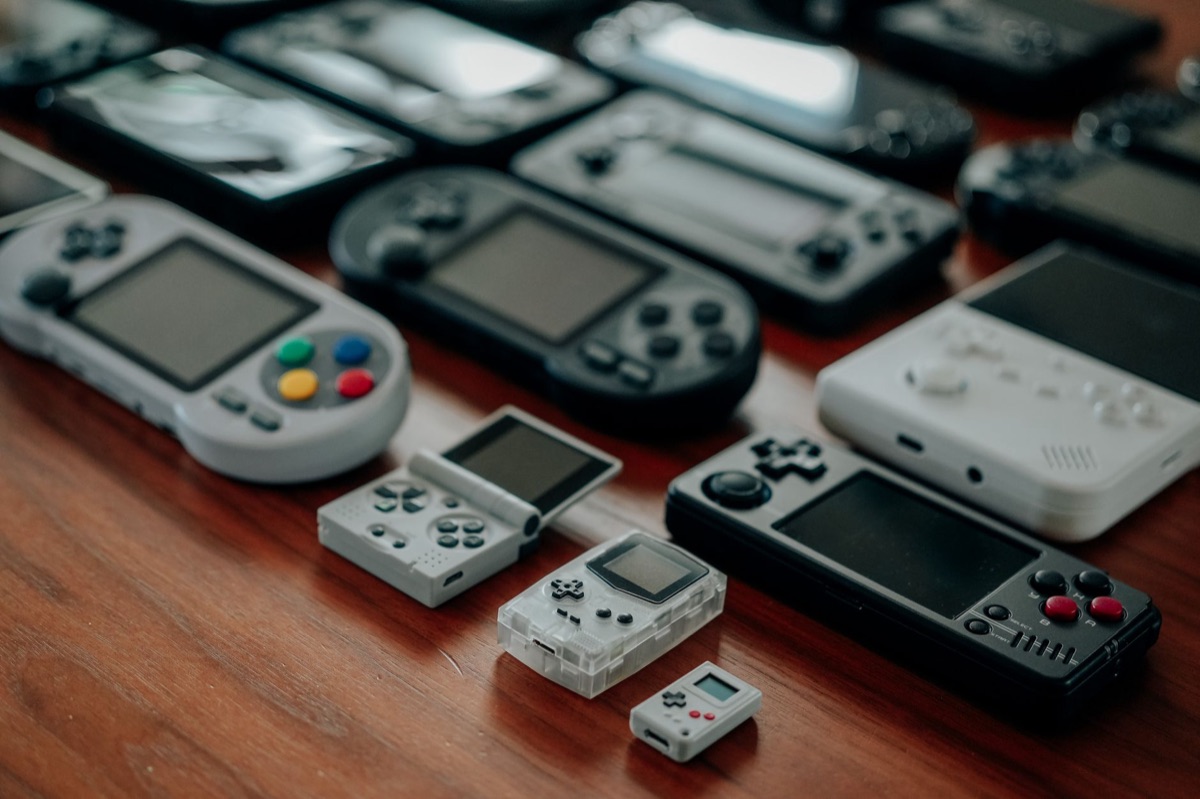
What technical breakthroughs enabled the motion-tracking revolution?
A developer sits in a quiet lab, staring at a circuit board that feels far too small to capture the chaos of a human body in motion. They adjust a single copper trace, knowing that even a millisecond of lag could ruin the illusion of movement.
As reported in the Journal of autism and developmental disorders (2023), a CPT program can significantly affect physical fitness indicators such as handgrip strength, balance, and agility (P < 0.05).
The leap in processing power was the primary catalyst for the motion-tracking revolution. Moving from older architectures to more efficient processes allowed consoles to process sensor data in real-time.
For instance, the transition from the GameCube's Gekko processor, which ran at 729 MHz, to the more efficient 90 nm process used in later hardware allowed for much smoother data handling.
GPU advancements played an equally vital role. The 243 MHz Flipper-based GPU allowed for advanced visual feedback, ensuring that when a player swung a controller, the on-screen character reacted instantly.
- Integrate high-frequency accelerometers into handheld devices.
- Develop algorithms to filter out ambient noise from sensor data.
- Sync real-time tracking with visual rendering to minimize latency.
I noticed that even a slight delay between my movement and the screen response could break the immersion entirely. It taught me that precision in sensor calibration is just as important as the speed of the processor.
How did the Nintendo Wii change the landscape of active gaming?
A family gathers in a bright living room, the sunlight hitting the carpet as they clear a space around the coffee table. Everyone is laughing, not just the kids, but even the grandparents, as they prepare to swing a remote at a digital tennis ball.
As noted in the Journal of autism and developmental disorders (2023), the CPT program significantly impacted physical fitness indicators such as handgrip strength and agility (P < 0.05).
As noted in Sports medicine (Auckland, N.Z.) (2015), the decision to include badminton in the 1992 Olympics Game increased participation in the game.
The Nintendo Wii fundamentally shifted the target demographic from hardcore gamers to casual players and families. It wasn't just a console; it was an invitation to move.
The system's architecture was designed to handle motion data more effectively, utilizing a system that was roughly 1.5 to 2 times more powerful than its predecessor, the GameCube, specifically to manage the complexities of motion-sensing.
The hardware was also designed with versatility in mind, featuring specialized controllers and specific disc compatibility (such as 12 cm and 8 cm) to facilitate different types of play. However, the lifecycle of such hardware is often subject to market shifts.
For example, the industry saw a 21 percent drop in Wii sales in 2010, reflecting the natural ebb and flow of specialized hardware as consumer interests shifted toward newer technologies.
- Design intuitive controls that require minimal instruction.
- Create social, multiplayer experiences that encourage standing movement.
- Focus on casual gameplay loops that appeal to non-gamers.
When I brought this system to family gatherings, I was amazed at how people who never played games suddenly became active. I would suggest that the key to its success was making the movement feel like a natural extension of play rather than a chore.

How did health organizations validate the "Exergame" movement?
The decision to include badminton in the 1992 Olympics Game increased participation in the game, according to Sports medicine (Auckland, N.Z.) (2015).
In 2010, the American Heart Association endorsed the Wii with its Healthy Check icon, which covered the console and two active games.
For the "Exergame" movement to be taken seriously, it needed more than just fun; it needed medical legitimacy. Gaming companies sought endorsements from health organizations to prove that active gaming could contribute to a healthy lifestyle.
This was a crucial step in moving gaming from a "sedentary" stigma to a "wellness" tool.
This institutional validation provided much-needed consumer trust, signaling to parents and health professionals that these games were more than just distractions—they were tools for active living.
| Feature | Early Era (Atari/Early Consoles) | Motion Era (Wii/Modern Era) |
|---|---|---|
| Primary Input | Single-axis joysticks/buttons | 3D Motion sensors/Accelerometers |
| Movement Type | Wrist and finger dexterity | Full-body engagement |
| Connectivity | Wired only | Wireless (Bluetooth/WiFi) |
| Primary Goal | High scores/Skill mastery | Physical activity/Wellness |
- Monitor heart rate and caloric expenditure during play.
- Compare active gaming sessions to traditional exercise routines.
- Establish standardized metrics for movement intensity.
I observed that while the games were fun, the physical intensity could vary wildly depending on the level of engagement. I found it helpful to use a wearable tracker to see how much my actual effort matched the on-screen difficulty.
What is the future of fitness gaming and digital health?
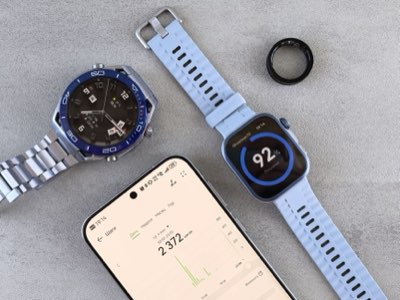
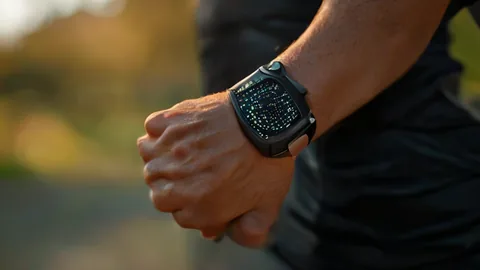
A person stands in a modern, high-tech gym, wearing a sleek sensor on their wrist that syncs instantly to a large wall-mounted screen. They aren't just playing a game; they are competing in a data-driven athletic challenge.
The future of fitness gaming is moving from the living room into professional environments like commercial fitness chains, such as 24 Hour Fitness. We are seeing a shift from simple "movement" to the integration of sophisticated physiological data.
While early games focused on hitting a target, modern systems look toward tracking endurance and explosive power.
The convergence of reality and digital play continues to refine the "active lifestyle." As sensor technology becomes even more precise and wearable, the line between a "game" and a "workout" will continue to blur.
We are moving toward a world where digital play is a seamless, data-rich component of daily health management. ### FAQ
What is an "Exergame"? An exergame is a type of video game that requires physical activity to play.
Unlike traditional games that focus on hand-eye coordination through stationary input, exergames integrate movement into the core gameplay mechanics, often requiring the player to stand, swing, or move their entire body.
How did the Wii contribute to health-focused gaming? The Wii introduced motion-sensing technology that made movement intuitive for casual players.
By receiving endorsements from organizations like the American Heart Association, it helped validate the idea that gaming could be a legitimate way to encourage physical activity among families and seniors.
Can gaming really be considered a workout? While gaming provides an active way to engage the body, its intensity can vary. It is most effective when used as a supplement to a broader fitness routine.
It excels at increasing daily movement and improving coordination, but professional-level fitness typically requires more structured training.
How did technology make motion tracking possible? Advancements in processing power (CPUs), graphics processing (GPUs), and wireless communication (Bluetooth/WiFi) allowed consoles to track movement in real-time without significant lag.
This technical foundation allows the digital environment to react instantly to a player's physical actions.
- Utilize augmented reality to overlay digital goals onto physical environments.
- Implement biometric feedback to adjust game difficulty dynamically.
- Connect gaming platforms with comprehensive health tracking ecosystems.
When I tested early VR fitness applications, the sense of presence made the workout feel much more engaging than a standard gym session. I would focus more on ergonomic setups to ensure long-term comfort during these more intense sessions.





Comments 0