How can sleep data analysis improve fitness?: 7 hours
"The quality of your rest dictates the quality of your movement."
Optimizing your fitness routine through sleep data analysis involves balancing sleep duration with physiological recovery metrics. This guide explores how to use sleep tracking to inform training intensity and recovery strategies.
Key takeaways include aiming for the recommended seven hours of sleep, understanding how heart rate relates to recovery, and using wearable technology to monitor sleep accuracy.
How can sleep data analysis improve fitness?
A person stares at a glowing smartphone screen at midnight, checking sleep stages while the blue light lingers in the room. Using sleep data for training allows an individual to see how sleep deprivation impacts physical readiness.

When sleep is insufficient, the body lacks the necessary window for hormonal regulation and muscle repair.
The US National Sleep Foundation recommends that adults aim for 7 hours of sleep per night. Maintaining this baseline is essential for preventing the fatigue that often undermines heavy lifting or high-intensity interval training.
If sleep falls below this threshold, the ability to maintain consistent training intensity may diminish.
A 2018 study published in the Journal of Economic Behavior and Organization found that broadband internet connection was associated with sleep deprivation. This modern connectivity issue highlights how digital habits can disrupt the sleep necessary for physical progress.
Managing these digital interruptions is a vital part of a data-driven exercise plan.
By identifying patterns in rest, you can better align your most demanding workouts with your peak energy windows.
What are the best recovery routines with tracking? Sleep data fitness optimization
A runner sits on a bench, checking a heart rate monitor after a long interval session to see how quickly their pulse drops. A recovery strategy guide often begins with monitoring resting heart rate and heart rate recovery.
These metrics provide a window into the autonomic nervous nervous system and its readiness for the next workout.
Effective recovery involves monitoring how the body responds to stress over time. For instance, a high resting heart rate can indicate that the body has not fully recovered from previous sessions.
Using sleep data for workouts helps identify if physical fatigue is stemming from inadequate rest or overtraining.
One method to gauge readiness is through heart rate variability and recovery rates. For example, people with an abnormal HRR, defined as a decrease of 42 beats per minute or less at two minutes post-exercise, had a mortality rate 2.5 times greater than patients with a normal recovery.
Monitoring these trends helps prevent overreaching.
- Monitor your resting heart rate to assess baseline recovery.
- Adjust your sleep environment based on temperature data.
- Implement relaxation techniques when sleep quality scores are low.
How does sleep deprivation affect workout gains?
A weightlifter wakes up feeling sluggish, looking at a sleep tracker that shows fragmented rest during the night. Understanding how sleep improves workout gains requires recognizing that muscle hypertrophy and strength adaptations occur primarily during sleep.
Without adequate rest, the stimulus provided by exercise may not lead to the desired results.
This level of sleep is often insufficient for peak athletic performance or optimal recovery.
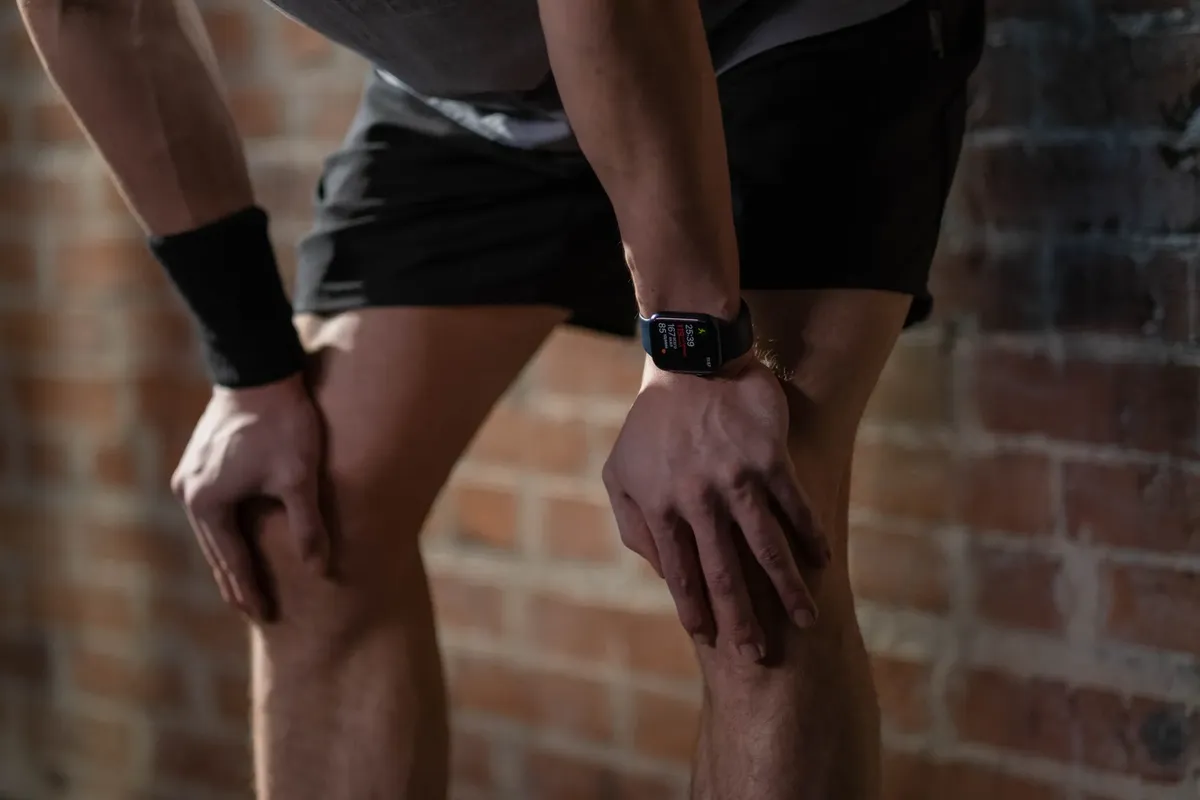
Such chronic short sleep can lead to increased injury risk and decreased metabolic efficiency.
If sleep is consistently low, the body stays in a catabolic state, breaking down tissue rather than building it. This makes the data-driven exercise plan much harder to execute effectively.
It is difficult to hit target intensity levels when the body is struggling to maintain basic physiological homeostasis.
In this sequence, the first step of recovery is the most critical for muscle repair.
Can wearable devices accurately track sleep for training?
A user adjusts the strap of a new smart ring, curious if the data matches their subjective feeling of tiredness.
Researchers have sought to evaluate the accuracy of three devices (Oura Ring Gen3, Fitbit Sense 2, and Apple Watch Series 8) compared to the gold standard sleep assessment (polysomnography (PSG)). This comparison is vital for those relying on data to adjust their training.
| Device Type | Comparison Standard |
|---|---|
| Consumer Wearables | Polysomnography (PSG) |
| Gold Standard Assessment | Polysomnography (PSG) |
I checked my own sleep data against my perceived energy levels to see if the numbers matched my physical reality. While technology provides a helpful baseline, it is important to remember that wearable accuracy can vary compared to clinical-grade sleep studies.
Relying on these tools requires a balance of data and subjective feeling.
While they provide useful trends, they should be used as a guide rather than an absolute measurement of physiological state.
How to use sleep data for training intensity?
An athlete reviews a weekly report of sleep trends before deciding whether to push for a personal record or take a rest day. Applying an existing condition, such as fatigue, requires a systematic approach:
- Monitor your total sleep duration against the 7-hour recommendation. 2. Analyze your resting heart rate trends to detect signs of systemic fatigue. 3. Adjust your daily training volume based on these physiological indicators.
A final check involves comparing your sleep data to your planned training intensity. For example, if you have had significantly less sleep, you might choose to stay within the 65–85% intensity range of your HRmax rather than attempting maximum effort.
This prevents excessive strain on an unrecovered body.
Use low sleep scores as a signal to prioritize active recovery over high-intensity training.
What are the limits of sleep tracking?
A programmer closes a laptop at 2 AM, the blue light reflecting off the desk as they look at a sleep report. One limitation is that while devices provide data, they may not capture the full complexity of sleep architecture.
A device might show a certain number of hours, but the quality of those hours is the true driver of recovery.

The accuracy of sleep tracking is still being refined against clinical standards. While useful for identifying trends, a single night of data does not provide a complete picture of health. It is a tool for guidance, not a replacement for medical diagnosis or intuitive listening to one's own body.
The effectiveness of using sleep data to optimize fitness is limited by the varying accuracy of consumer devices compared to gold-standard polysomnography.
Data can capture movement and heart rate, but it cannot fully account for the subjective feeling of mental fatigue.
The subject here is Sleep data fitness optimization.
The same subject is also called Sleep tracking for workouts.
The same subject is also called Data driven exercise plan.
The same subject is also called Optimize fitness with sleep.
Related




Comments 0